اكتشف كل ما تريد معرفته عن Zero Latency VR في منطقتك
- Zero Latency VR Madrid
- Zero Latency VR Reno South
- Zero Latency VR Scottsdale
- Zero Latency VR Las Vegas
- Zero Latency VR Brisbane
- Zero Latency VR Lisbon
- Zero Latency VR Bangkok
- Zero Latency VR Dandenong, Melbourne
- Zero Latency VR Terrassa
- Zero Latency VR Nottingham
- Zero Latency VR Dublin Sandyford
- Zero Latency VR Munich
- Zero Latency VR Hampton Roads
- Zero Latency VR Mumbai
- Zero Latency VR Houston, Katy
- Zero Latency VR Reno
- Zero Latency VR Montreal
- Zero Latency VR Gold Coast
- Zero Latency VR Brussels
- Zero Latency VR Calgary
- Zero Latency VR Vancouver
- Zero Latency VR Rotterdam
- Zero Latency VR Barcelona
- Zero Latency VR Perth
- Zero Latency VR Gurgaon
- Zero Latency VR Monterrey
- Zero Latency VR Birmingham
- Zero Latency VR Coral Springs
- Zero Latency VR Bilbao
- Zero Latency VR Abu Dhabi
- Zero Latency VR Milano
- Zero Latency VR Sunshine Coast
- Zero Latency VR Malaga
- Zero Latency VR Grand Rapids
- Zero Latency VR French Guiana
- Zero Latency VR Cleveland
- Zero Latency VR Basel
- Zero Latency VR Adelaide
- Zero Latency VR Tampa
- Zero Latency VR Toulouse
- Zero Latency VR Jacksonville
- Zero Latency VR Wien - Shopping City Süd
- Zero Latency VR Docklands, Melbourne
- Zero Latency VR Reading
- Zero Latency VR Tannersville
- Zero Latency VR Auckland
- Zero Latency VR Valencia
- Zero Latency VR Cincinnati
- Zero Latency VR Langley
- Zero Latency VR Geneva
- Zero Latency VR Hanover
- Zero Latency VR Houston, The Woodlands
- Zero Latency VR Ottawa
- Zero Latency VR Toronto
- Zero Latency VR Seattle
- Zero Latency VR La Rochelle
- Zero Latency VR Parramatta
- Zero Latency VR Manchester
- Zero Latency VR San Antonio
- Zero Latency VR Gent
- Zero Latency VR Antwerpen
- Zero Latency VR Hawalli
- Zero Latency VR Fort Worth, Hulen
- Zero Latency VR Guildford
- Zero Latency VR Doral
- Zero Latency VR Zurich
- Zero Latency VR Amsterdam
- Zero Latency VR Irving
- Zero Latency VR Richmond
- Zero Latency VR Austin, South
- Zero Latency VR Almere
- Zero Latency VR Fiumicino
- Zero Latency VR Burlington
- Zero Latency VR Spielberg
- Zero Latency VR New Orleans
- Zero Latency VR Waterloo
- Zero Latency VR Wien - Donau Zentrum
- Zero Latency VR Owings Mills
- Zero Latency VR Moorabbin, Victoria
- Zero Latency VR Dublin Swords
- Zero Latency VR Canberra
- Zero Latency VR Santa Monica
- Zero Latency VR Geelong
- Zero Latency VR Branson
- Zero Latency VR Gilbert
- Zero Latency VR Furth, Nurnberg-Nord
- Zero Latency VR Alexandria, Sydney
- Zero Latency VR Dubai Marina
- Zero Latency VR Torino
- Zero Latency VR Duisburg
- Zero Latency VR San Diego Miramar
- Zero Latency VR Giussano
- Zero Latency VR Fresno
- Zero Latency VR Prague
- Zero Latency VR Dortmund
- Zero Latency VR Bologna
- Zero Latency VR Sainte-Thérèse
- Zero Latency VR Taastrup
- Zero Latency VR Cologne
- Zero Latency VR Schaumburg
- Zero Latency VR La Coruña
- Zero Latency VR Highland, Indiana
- Zero Latency VR Palma de Mallorca
- Zero Latency VR ZERO LATENCY VR Cormeilles en Parisis
- Zero Latency VR Kaslik
- Zero Latency VR Lyon sud
- Zero Latency VR Stuttgart
- Zero Latency VR Roseville
- Zero Latency VR St Charles
- Zero Latency VR Glendale
- Zero Latency VR Gallup
- Zero Latency VR South Morang Victoria
- Zero Latency VR Yogyakarta
- Zero Latency VR Unna
- Zero Latency VR Westbury
- Zero Latency VR Kelowna
- Zero Latency VR Downtown Westminster
- Zero Latency VR Bergen
- Zero Latency VR Vaughan
- Zero Latency VR Utrecht
- Zero Latency VR Winterthur
- Zero Latency VR Asunción
- Zero Latency VR Dallas, Downtown
- Zero Latency VR Biganos
- Zero Latency VR Rabat
- Zero Latency VR CDMX
- Zero Latency VR Peter Demian
- Zero Latency VR Košice
- Zero Latency VR Antibes
- Zero Latency VR Lippstadt
- Zero Latency VR Palm Desert
- Zero Latency VR Richmond City
- Zero Latency VR Michigan City
- Zero Latency VR Irun
- Zero Latency VR Makati
- Zero Latency VR Rostock
- Zero Latency VR Angers
- Zero Latency VR Ithaca
- Zero Latency VR Zagreb
- Zero Latency VR Brea
- Zero Latency VR Pau
- Zero Latency VR Nicosia
- Zero Latency VR Lagos
- Zero Latency VR Sarasota
How the Immersive Experience Economy is Changing Entertainment
نُشر في
آخر تحديث
Key Takeaways
Understanding the Immersive Experience Economy: This rapidly growing market prioritises active, participatory experiences over passive consumption.
The Role of Free-Roam VR: A clear example of this trend, VR embodies the shift to highly interactive and social gameplay.
Experience the Future of Entertainment: Step into this new era with Zero Latency’s untethered free-roam VR, the ultimate large-scale, multiplayer immersion.
Today's audiences don't just want to watch entertainment. They want to feel, participate, and become part of the story. The immersive experience economy is at the forefront of this shift. This article unpacks how new technologies, economies, and business models are converging to rewrite the rule book, and what this means for the future of entertainment.
What Is the Immersive Experience Economy?
The immersive experience economy was first defined by Joseph Pine and James Gilmore in the mid-1990s as a response to changing consumer behaviour. They identified four types of sought-after experiences: Educational, Aesthetic, Escapist, and Entertainment.
Consumers increasingly desire experiences, not just a product or service. This means being part of an event through deep physical or virtual immersion, a shift seen everywhere from retail pop-ups to digital platforms.
Fuelled by rapid advancements in VR, AR, and AI, this trend is creating truly interactive, multi-sensory worlds. This tech-driven growth is a major market force, cementing the immersive experience as a growing experiential entertainment trend.
Why Audiences Crave Immersion Now More Than Ever
So, why are audiences moving away from traditional forms of entertainment? It's all about the search for genuinely meaningful experiences.
Lasting Memories: Immersive experiences build emotional memories and genuine connections that far outlast the fleeting enjoyment of passive media.
The Experience-First Generation: Millennials and Gen Z are driving this trend, as they prioritise spending on unique, real-world moments over acquiring material goods.
Social Shareability: Experiences are now a form of social currency that are designed to be shared, fuelling a wave of user-generated content on Instagram and TikTok.
Connection Over Content: People want to be the hero of their own story and bond with others through a shared narrative they live, not just watch.
How Zero Latency VR Embodies the Immersive Economy
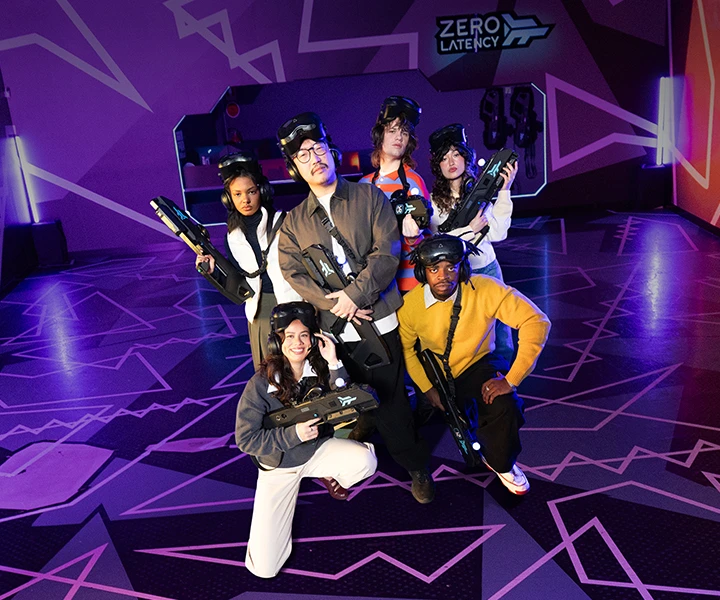
Zero Latency is the largest free-roam VR network in the world, operating in over 140 venues across 30 countries. With an industry-leading untethered system, these VR experiences show how groundbreaking technology is advancing the immersive experience economy.
Free-Roam VR Puts Players Inside the Action
Unlike traditional, wired VR, Zero Latency's free-roam VR puts you directly into the action. Your body is the controller, allowing seamless movement through vast virtual worlds. This untethered freedom is the essence of interactive entertainment.
Where Storytelling and Physical Action Converge
Zero Latency experiences go beyond traditional gaming. By blending physical movement with narrative, the multi-sensory environment engages every sense. This creates a powerful experience that traditional, passive media simply can't match.
Replaces Traditional Entertainment with Emotional Investment
By moving from spectator to participant, players form a real emotional investment in the experience. The combination of intense action and teamwork creates lasting memories - the driving force behind the immersive experience economy.
With 81% of consumers considering virtual reality to be an extremely or very appealing entertainment concept, Zero Latency embodies the growing demand for immersive, multiplayer experiences.
The Business Impact of Immersive Entertainment
The immersive experience economy was valued at $133.6 billion in 2024 and projected to reach nearly $474 billion by 2030.
By offering unique, high-quality immersion, businesses can drive repeat visits, build brand loyalty, and benefit from word-of-mouth marketing. It's a shift in value from a single purchase to a long-term connection with the customer.
The immersive experience economy is now expanding into the B2B space, with growing demand across corporate events, team building, and tourism.
What’s Next in the Immersive Experience Economy?
The immersive experience economy is set to go mainstream. Here are the key trends that will shape how we play and connect.
Technological Convergence: AI-driven narratives and mixed reality will power the next wave of immersive tech trends in entertainment.
Hybrid Experiences: Physical venues will transform into hybrid experiences, blending digital and physical worlds into large-scale, multisensory attractions.
Scaling Social Immersion: The focus will be on group-scale experiences that combine social interaction with cutting-edge tech.
Conclusion: The Future Isn’t Passive - It’s Participatory
The immersive experience economy is transforming the future of entertainment, moving from passive spectators to active participants. Zero Latency VR is a flagship example of this new era, with untethered, multiplayer free-roam VR. Why not experience this sensory experience and social connection for yourself? Book Zero Latency VR online now and step inside the experience - your world is waiting.
Frequently Asked Questions
1. What is the immersive economy?
An evolving business model where companies create memorable, interactive experiences. The immersive experience economy engages consumers as active participants rather than passive spectators.
2. Why is experiential entertainment growing?
The experiential entertainment sector is booming due to consumer demand for unique, social experiences over material goods. The global immersive entertainment market is projected to grow from $144.17 billion in 2025 to $426 billion by 2030.
3. How is the immersive experience economy changing entertainment?
The immersive experience economy is driving a fundamental shift from passive viewership to active, hands-on participation and emotional investment, leveraging new technologies like AI and VR.
4. What are the latest immersive tech trends in entertainment?
Expect highly personalised, multi-sensory experiences through advancements in adaptive storytelling, haptics, and Mixed Reality.